From the palenque in San Dionisio Ocotepec to the final distillate: technique, territory, and authenticity
The origins of Bendito Eres mezcal and its production distillery
Mezcal is a spirit deeply tied to its place of origin, as the territory shapes both the agave’s development and the product’s final character. In the case of Bendito Eres, production takes place in San Dionisio Ocotepec, Oaxaca—one of the historic areas within the Mezcal Denomination of Origin. This town is recognised for its mezcal tradition and for preserving artisanal methods in family-run palenques, where the process remains faithful to techniques passed down through generations.
Agave selection: the structural foundation of mezcal
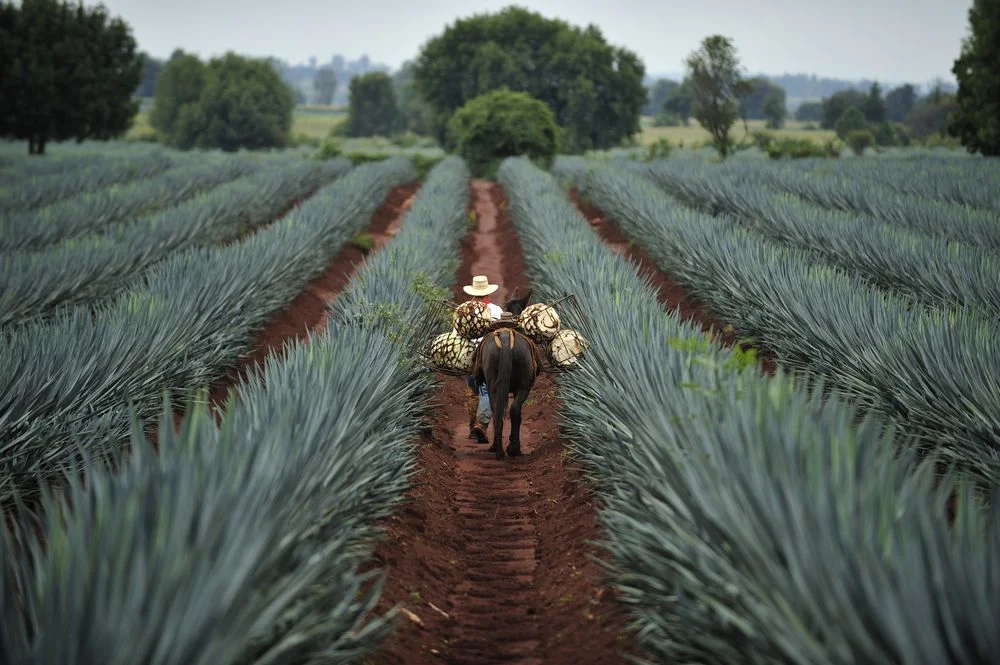
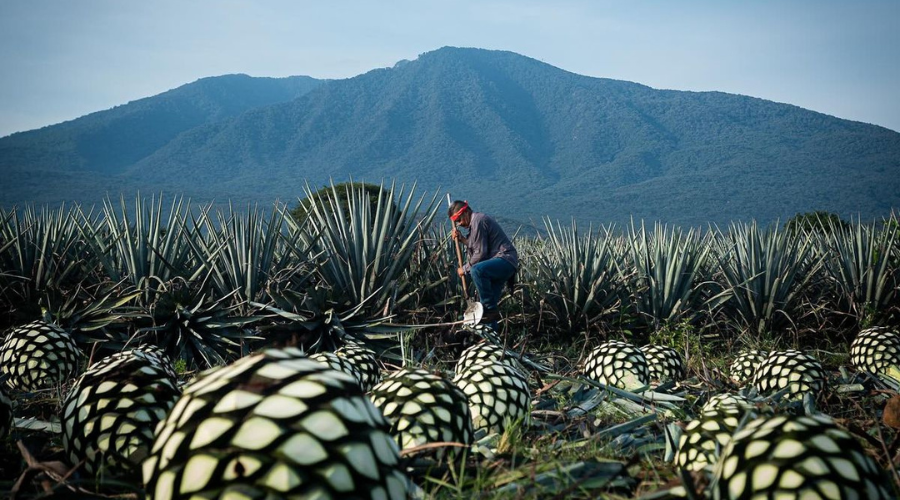
The production process begins with selecting agave at its optimal stage of ripeness—a technically critical step. Depending on the variety, agave may require between seven and more than fifteen years to develop an adequate concentration of sugars. A properly mature agave ensures efficient fermentation and greater aromatic complexity in the final distillate.
Jimado and preparation of the piñas
Once maturity is reached, the agave undergoes jimado, a manual process in which the leaves are removed until only the piña—the heart of the maguey—remains. This part concentrates the fermentable sugars and is transported to the palenque in San Dionisio Ocotepec, where its transformation into mezcal begins. Precise cutting is essential to avoid green or overly bitter flavours.
Cooking in a volcanic-stone oven
Cooking is one of the most distinctive steps in artisanal mezcal production. In traditional palenques in Oaxaca, the agave piñas are cooked in conical pits dug into the ground, lined with volcanic stone and heated with firewood. Over several days, the heat converts the agave’s starches into fermentable sugars and creates the compounds responsible for the smoky profile that sets mezcal apart from other agave spirits.
Traditional milling: extraction of the must
After cooking, the piñas are left to cool and then milled, typically using a stone tahona. This traditional method extracts the juices from the cooked agave without completely destroying the fibres, preserving compounds that add body, texture, and depth to the must. The result is a mixture of juice and bagazo (spent fibre) ready for fermentation.
Natural fermentation in wooden vats
The must is placed into wooden vats—generally pine—where it ferments spontaneously thanks to natural yeasts present in the environment. This fermentation, shaped by the climate and local microbiota of San Dionisio Ocotepec, is one of the factors that most influences mezcal’s sensory profile, contributing fruity, herbal, and mineral notes.
Distillation in copper stills
Once fermentation is complete, the liquid is distilled in copper stills, usually through two distillations. This process concentrates the alcohol and refines the spirit by separating out undesirable fractions. The mezcal master’s experience is essential in defining the balance between alcoholic intensity, purity, and the expression of the agave.
Resting in glass and bottling
Unlike other spirits, many artisanal mezcals are not aged in barrels. Instead, they are rested in glass before bottling, which allows the mezcal to stabilise without altering its original profile. This resting period preserves the identity of the agave and the artisanal process, keeping intact the character of mezcal produced in Oaxaca.
Paragraph
Conclusion: territory, technique, and respect for tradition
The artisanal mezcal-making process is a precise combination of territory, technique, and time. In the case of Bendito Eres, its production in San Dionisio Ocotepec—within one of the historic areas covered by the Mezcal Denomination of Origin—reinforces its connection to Oaxacan tradition. Understanding each stage of the process allows you to appreciate not only the flavour of the mezcal, but also the craftsmanship and cultural legacy behind every bottle.